
"Made From Ocean Plastic" Doesn't Mean What You Think It Means
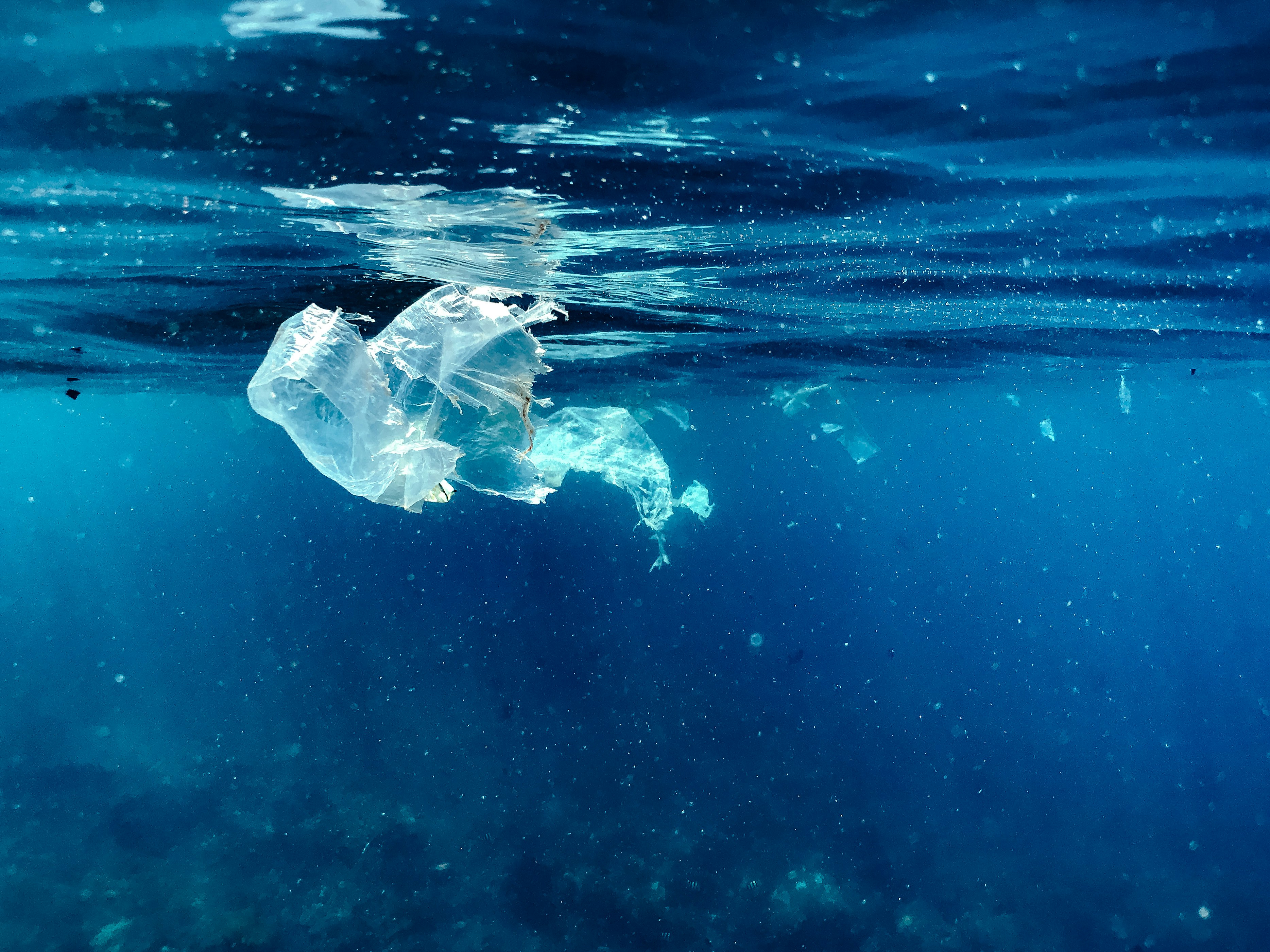
Ocean plastic has become a fixture of marketing sustainable design. They evoke a clear image: plastic pulled from the sea, and given a second life. What was once a 6-pack ring holder strangling a turtle is now an eco-conscious bottle of dish soap. The emotional message is powerful, and that is precisely the problem.
As a design practice we make material decisions for our clients regularly, and part of that work involves understanding what claims are legit and what ones are misleading.
There is no universally accepted definition of "ocean plastic" or "ocean-bound plastic”.
The most widely cited framework for ocean-bound plastic comes from Jambeck et al., whose 2015 study modelled plastic waste inputs into the ocean and identified mismanaged waste within 50 kilometres of a coastline as a primary source of marine debris [1].
That is one definition. Other definitions vary in terms of radius or distance. Some include any plastic near a waterway regardless of waste management conditions. Some use "ocean plastic" and "ocean-bound plastic" interchangeably. There is no ISO standard. There is no regulatory body enforcing it.
A brand can label its packaging "made from ocean plastic" and be referring to material collected from a landfill 48 kilometres from a river in Southeast Asia. Technically acceptable under certain frameworks, yet misleading to any consumer reading the label.
It's confusing
Most consumers interpret "ocean plastic" to mean plastic physically removed from the ocean. A study by the Changing Markets Foundation found that environmental claims on plastic packaging were routinely misunderstood, with consumers overestimating both recycled content and the environmental benefit implied by the labelling [2].
The terms also bleed into each other in marketing contexts. We have seen packaging that uses "ocean plastic" in headline copy and clarifies in fine print that the material is "ocean-bound." While that might satisfy a lawyer, it is misleading to the person standing in a shop aisle making a purchasing decision.
The recovery problem
The vast majority of plastic that enters the ocean cannot be recovered. Once it enters marine environments, it disperses, sinks, and fragments. According to a 2020 report from the Pew Charitable Trusts and SYSTEMIQ, even under aggressive intervention scenarios, recovery of plastic already in the ocean is logistically and economically marginal relative to the scale of the problem [3].
This means the supply of genuinely ocean-recovered plastic is inherently limited. It cannot sustain a packaging supply chain at meaningful commercial scale. When a brand produces millions of units labelled "made from ocean plastic," the math should raise an eyebrow. In most cases, the material is not ocean-recovered at all, or it constitutes a small fraction of the total, blended with other recycled or virgin plastic.
The term implies that buying the product addresses plastic in the ocean. The reality is that most of these programmes address plastic that has not yet reached the ocean.
Regulatory scrutiny is tightening
We are not alone in this concern. The EU adopted Directive 2024/825 which explicitly targets unsubstantiated environmental claims on products [4]. Under the directive, unqualified claims about recycled content origin must be substantiated with verifiable evidence. The Australian Competition and Consumer Commission has similarly flagged sustainability claims as an enforcement priority [5]. The direction is clear: the era of vague environmental labelling is ending.
The underlying concern shared across these bodies is consistent. When environmental claims are ambiguous, unverifiable, or designed to evoke an emotional response that is misleading - they function as greenwashing.
Our stance
We have not used ocean plastic or ocean-bound plastic claims in any of our work. We think the terminology is too malleable, too easily misread, and too poorly defined to build a credible sustainability narrative on. When we specify recycled materials for a project, we want to tell a client precisely what the material is, where it came from, and what the end-of-life pathway looks like in their specific markets.
We also think this framing points the conversation in an unhelpful direction. The most impactful material decision a brand can make is usually the least dramatic one: choosing a material with verified recycled content, designing for recyclability in the actual target markets, and being honest about the trade-offs. These choices do not generate the same emotional response as "we pulled this plastic from the ocean," but they are more verifiable, more scalable, and more likely to produce real outcomes.
If the definitions tighten, and consumer understanding catches up to reality, our position could change. Until then, the most honest thing a studio can do is to resist using language that sounds better than it is
We would genuinely like to hear how others are navigating these questions. Reach out to us at hello@forrestblake.com.
Thanks for reading.
[1] J. R. Jambeck, R. Geyer, C. Wilcox, T. R. Siegler, M. Perryman, A. Andrady, R. Narayan, and K. L. Law, "Plastic waste inputs from land into the ocean," Science, vol. 347, no. 6223, pp. 768--771, Feb. 2015, doi: 10.1126/science.1260352.
[2] Changing Markets Foundation, "Talking Trash: How the plastics industry is fighting to keep polluting the planet," 2020. [Online]. Available: https://changingmarkets.org/report/talking-trash/
[3] The Pew Charitable Trusts and SYSTEMIQ, "Breaking the Plastic Wave: A comprehensive assessment of pathways towards stopping ocean plastic pollution," 2020. [Online]. Available: https://www.pewtrusts.org/en/research-and-analysis/articles/2020/07/23/breaking-the-plastic-wave-top-findings
[4] European Parliament and Council of the European Union, "Directive (EU) 2024/825 of 28 February 2024 amending Directives 2005/29/EC and 2011/83/EU as regards empowering consumers for the green transition," Official Journal of the European Union, L series, Mar. 2024.
[5] ACCC, “Environmental and sustainability claims,” www.accc.gov.au, Jul. 14, 2023. https://www.accc.gov.au/consumers/advertising-and-promotions/environmental-and-sustainability-claims
Ocean plastic has become a fixture of marketing sustainable design. They evoke a clear image: plastic pulled from the sea, and given a second life. What was once a 6-pack ring holder strangling a turtle is now an eco-conscious bottle of dish soap. The emotional message is powerful, and that is precisely the problem.
As a design practice we make material decisions for our clients regularly, and part of that work involves understanding what claims are legit and what ones are misleading.
There is no universally accepted definition of "ocean plastic" or "ocean-bound plastic”.
The most widely cited framework for ocean-bound plastic comes from Jambeck et al., whose 2015 study modelled plastic waste inputs into the ocean and identified mismanaged waste within 50 kilometres of a coastline as a primary source of marine debris [1].
That is one definition. Other definitions vary in terms of radius or distance. Some include any plastic near a waterway regardless of waste management conditions. Some use "ocean plastic" and "ocean-bound plastic" interchangeably. There is no ISO standard. There is no regulatory body enforcing it.
A brand can label its packaging "made from ocean plastic" and be referring to material collected from a landfill 48 kilometres from a river in Southeast Asia. Technically acceptable under certain frameworks, yet misleading to any consumer reading the label.
It's confusing
Most consumers interpret "ocean plastic" to mean plastic physically removed from the ocean. A study by the Changing Markets Foundation found that environmental claims on plastic packaging were routinely misunderstood, with consumers overestimating both recycled content and the environmental benefit implied by the labelling [2].
The terms also bleed into each other in marketing contexts. We have seen packaging that uses "ocean plastic" in headline copy and clarifies in fine print that the material is "ocean-bound." While that might satisfy a lawyer, it is misleading to the person standing in a shop aisle making a purchasing decision.
The recovery problem
The vast majority of plastic that enters the ocean cannot be recovered. Once it enters marine environments, it disperses, sinks, and fragments. According to a 2020 report from the Pew Charitable Trusts and SYSTEMIQ, even under aggressive intervention scenarios, recovery of plastic already in the ocean is logistically and economically marginal relative to the scale of the problem [3].
This means the supply of genuinely ocean-recovered plastic is inherently limited. It cannot sustain a packaging supply chain at meaningful commercial scale. When a brand produces millions of units labelled "made from ocean plastic," the math should raise an eyebrow. In most cases, the material is not ocean-recovered at all, or it constitutes a small fraction of the total, blended with other recycled or virgin plastic.
The term implies that buying the product addresses plastic in the ocean. The reality is that most of these programmes address plastic that has not yet reached the ocean.
Regulatory scrutiny is tightening
We are not alone in this concern. The EU adopted Directive 2024/825 which explicitly targets unsubstantiated environmental claims on products [4]. Under the directive, unqualified claims about recycled content origin must be substantiated with verifiable evidence. The Australian Competition and Consumer Commission has similarly flagged sustainability claims as an enforcement priority [5]. The direction is clear: the era of vague environmental labelling is ending.
The underlying concern shared across these bodies is consistent. When environmental claims are ambiguous, unverifiable, or designed to evoke an emotional response that is misleading - they function as greenwashing.
Our stance
We have not used ocean plastic or ocean-bound plastic claims in any of our work. We think the terminology is too malleable, too easily misread, and too poorly defined to build a credible sustainability narrative on. When we specify recycled materials for a project, we want to tell a client precisely what the material is, where it came from, and what the end-of-life pathway looks like in their specific markets.
We also think this framing points the conversation in an unhelpful direction. The most impactful material decision a brand can make is usually the least dramatic one: choosing a material with verified recycled content, designing for recyclability in the actual target markets, and being honest about the trade-offs. These choices do not generate the same emotional response as "we pulled this plastic from the ocean," but they are more verifiable, more scalable, and more likely to produce real outcomes.
If the definitions tighten, and consumer understanding catches up to reality, our position could change. Until then, the most honest thing a studio can do is to resist using language that sounds better than it is
We would genuinely like to hear how others are navigating these questions. Reach out to us at hello@forrestblake.com.
Thanks for reading.
[1] J. R. Jambeck, R. Geyer, C. Wilcox, T. R. Siegler, M. Perryman, A. Andrady, R. Narayan, and K. L. Law, "Plastic waste inputs from land into the ocean," Science, vol. 347, no. 6223, pp. 768--771, Feb. 2015, doi: 10.1126/science.1260352.
[2] Changing Markets Foundation, "Talking Trash: How the plastics industry is fighting to keep polluting the planet," 2020. [Online]. Available: https://changingmarkets.org/report/talking-trash/
[3] The Pew Charitable Trusts and SYSTEMIQ, "Breaking the Plastic Wave: A comprehensive assessment of pathways towards stopping ocean plastic pollution," 2020. [Online]. Available: https://www.pewtrusts.org/en/research-and-analysis/articles/2020/07/23/breaking-the-plastic-wave-top-findings
[4] European Parliament and Council of the European Union, "Directive (EU) 2024/825 of 28 February 2024 amending Directives 2005/29/EC and 2011/83/EU as regards empowering consumers for the green transition," Official Journal of the European Union, L series, Mar. 2024.
[5] ACCC, “Environmental and sustainability claims,” www.accc.gov.au, Jul. 14, 2023. https://www.accc.gov.au/consumers/advertising-and-promotions/environmental-and-sustainability-claims