
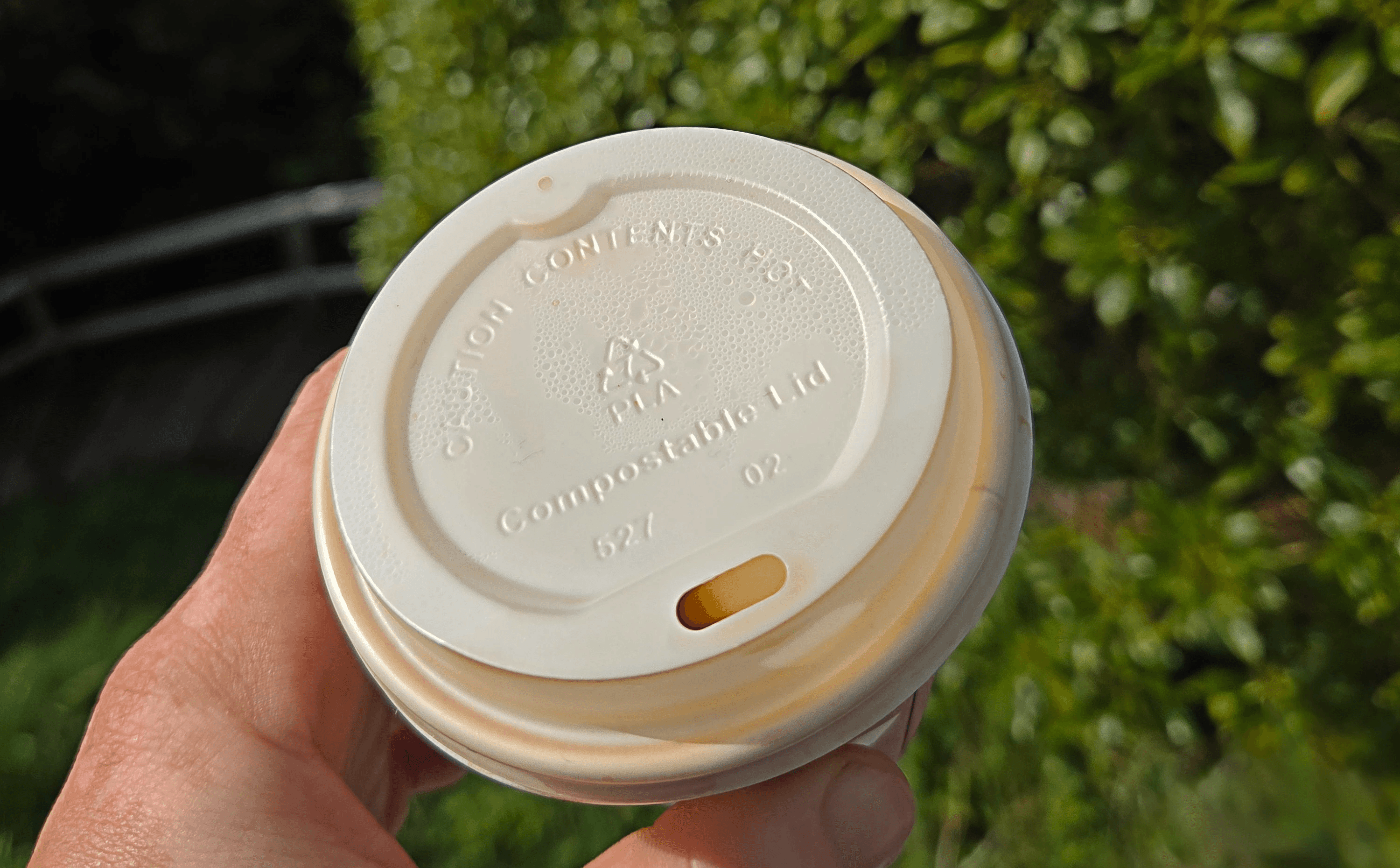
Your "Compostable" Packaging Might Not Be Compostable. Here's Why
The word "compostable" on a product sounds straightforward. You buy the thing, you use the thing, you put it in the compost and it returns to the earth. The reality is significantly more complicated, because there are two entirely different standards of compostability requiring two entirely different sets of conditions. One is accessible to anyone with a garden. The other requires a specialised industrial facility that most people do not have access to, may not know exists, and in many regions, does not exist at all.
One word, many meanings
Home compostable means the material will break down in a typical backyard system; moderate temperatures, natural microbial activity, no mechanical intervention. In Australasia, the relevant standard is AS 5810 (2010) [1], which is based on TÜV Austria's OK compost HOME certification [2] . These require disintegration and biodegradation within roughly twelve months at ambient temperatures.
Industrially compostable means the material requires a facility operating at sustained temperatures of 55 to 70 degrees Celsius, with controlled moisture and aeration. The primary international standard is EN 13432, requiring 90% biodegradation within six months under these managed conditions [3]. This is also known as commercial composting.
‘Biodegradable’ is an umbrella term that covers both home and industrial composting. It describes the process of breaking down organic matter into substances such as carbon dioxide and water. The term is vague and sometimes misleading, often used when a product's compostable characteristics aren't certified.
The key takeaway: industrially compostable materials will not break down in a home compost bin. They will sit there, intact, for years. A consumer who puts an industrially compostable coffee cup lid into their garden compost is, practically speaking, adding persistent waste to their soil.
The consumer perception gap
Research consistently shows that consumers do not understand these terms. A 2023 survey by Closed Loop Partners found that about 49% of respondents had trouble distinguishing between the terms “biodegradable” and “compostable” [4]. Another survey in Germany found that 58% of respondents thought that all ‘bioplastics’ were biodegradable [5]. When shoppers see a leaf icon or the word "compostable" printed on a coffee cup, or takeout container, many reasonably assume they can toss the item into their backyard bin or, at minimum, their kerbside organics collection. The problem here is that most of these compostable products are only industrially compostable.
The infrastructure gap
In Australia, less than 8% of councils accept compostable packaging in their residential compost collections [5]. In New Zealand, there are only 7 industrial composting facilities that can collect compostable packaging [6]. The local facility here in Wellington will not accept any packaging that contains bioplastics, which means the PLA compostable coffee cup from my local cafe does not have a viable end-of-life pathway.
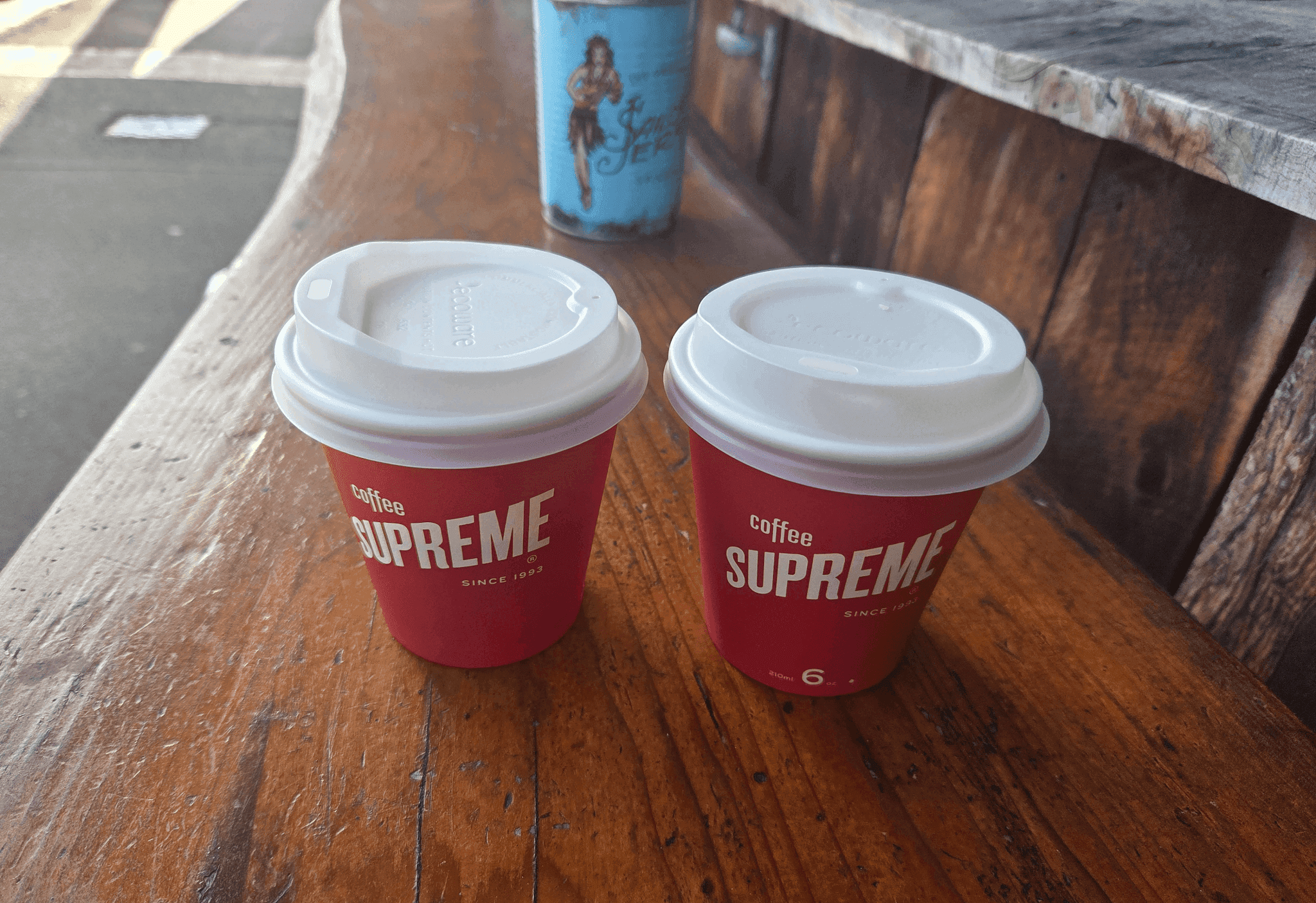
Even where facilities exist, collection is a separate bottleneck. Kerbside collection of compostable packaging remains limited around the world. Without a collection pathway, a compostable product has two realistic destinations: landfill or a home compost bin where it will not decompose.
When compostable packaging ends up in landfill, which is where the majority of it currently goes, it may produce worse outcomes than conventional plastic. In anaerobic landfill conditions, compostable materials can generate methane, a greenhouse gas roughly 80 times more potent than carbon dioxide [7]. Conventional plastics, being inert in landfill, do not produce methane. This does not make conventional plastic preferable (they have their own issues). It means that the compostable label, without the right disposal infrastructure, can produce a negative climate outcome.
What this looks like in practice
PLA cups and containers. Polylactic acid is one of the most widely used bioplastics in packaging. It requires sustained temperatures above 58 degrees Celsius to biodegrade and is certified only to the industrial standard [8]. In a home compost bin, it will persist largely intact for years.
Compostable bin bags. Some are certified home compostable (AS 5810 or OK compost HOME), others only to the industrial standard. Both use the word "compostable" prominently. The consumer in the supermarket aisle has almost no way to tell the difference without examining the fine print.
Moulded fibre packaging with bioplastic coatings. Takeaway bowls made from bagasse or bamboo pulp are often coated with PLA for grease resistance. The fibre is readily home compostable. The coating typically is not. The natural appearance of the fibre gives consumers the impression it will decompose easily in any setting, but the composite material is only certified industrially compostable.
Uncoated cardboard and paper. Plain, uncoated cardboard such as egg cartons and paper bags are genuinely home compostable. It breaks down within weeks. This is a useful reference point: when something actually is home compostable, the process is simple and fast.
Home compostable films. More and more products are being packaged in home compostable films. On the surface, this seems like a positive shift, and often brands have good intentions here, but using home compostable film doesn't guarantee the entire package is home compostable. WasteMINZ and Plastics NZ guidelines state that the final packaged product, not just its components, must be verified as compostable before any such claim can be made. This matters because the dyes and adhesives commonly used alongside home compostable films are often not compostable themselves.
Where we land on this
We think compostable packaging has a genuine role in closed-loop systems such as events, stadiums and corporate campuses - where collection can be controlled and materials are routed to the right facility.
What concerns us is the open-market application: compostable packaging sold into retail environments where the product has no realistic composting pathway, and where the label creates a false sense of circularity. In those contexts, the word "compostable" is doing marketing work that is actively misleading the consumer.
For the projects we work on, we weigh compostable materials against the framework we would apply to any material decision. If the end-of-life pathway is not reliably available in the target market, we do not treat the material as a sustainable solution regardless of what its certification says. A material is only as sustainable as the system it enters.
The honest position is that packaging should be chosen based on what will actually happen to it, not what could happen under ideal conditions. Until industrial composting infrastructure catches up to the volume of industrially compostable packaging being produced, that gap between "could" and "will" is where most of the environmental benefit gets lost.
We would like to hear how others are navigating this. If you are making packaging decisions and weighing compostable options, reach out to us at hello@forrestblake.com.
Thanks for reading.
[1] Standards Australia, "AS 5810-2010: Biodegradable plastics — Biodegradable plastics suitable for home composting," 2010.
[2] TÜV Austria, "OK compost HOME," TÜV Austria NV. [Online]. Available: https://okcert.tuvaustria.com/ok-compost-home-en/.
[3] European Committee for Standardization, "EN 13432:2000 — Packaging — Requirements for packaging recoverable through composting and biodegradation," 2000.
[4] Closed Loop Partners, "Unpacking Labeling and Design: U.S. Consumer Perception of Compostable Packaging," Closed Loop Partners, New York, NY, USA, Jul. 2023. [Online]. Available: https://www.closedlooppartners.com/wp-content/uploads/2023/07/Composting-Consortium_Consumer-Insights-Report.pdf
[5] Compost Connect, "Australian Councils Composting," Compost Connect. [Online]. Available: https://www.compostconnect.org/councils/.
[6] WasteMINZ, "New Zealand facilities that accept compostable packaging and food serviceware," WasteMINZ. [Online]. Available: https://www.wasteminz.org.nz/our-work/hot-topics/compostable-packaging-facilities.
[7] IPCC, "Climate Change 2021: The Physical Science Basis. Contribution of Working Group I to the Sixth Assessment Report," Cambridge University Press, 2021.
[8] R. Auras, B. Harte, and S. Selke, "An overview of polylactides as packaging materials," Macromol. Biosci., vol. 4, no. 9, pp. 835–864, 2004, doi: 10.1002/mabi.200400043.
The word "compostable" on a product sounds straightforward. You buy the thing, you use the thing, you put it in the compost and it returns to the earth. The reality is significantly more complicated, because there are two entirely different standards of compostability requiring two entirely different sets of conditions. One is accessible to anyone with a garden. The other requires a specialised industrial facility that most people do not have access to, may not know exists, and in many regions, does not exist at all.
One word, many meanings
Home compostable means the material will break down in a typical backyard system; moderate temperatures, natural microbial activity, no mechanical intervention. In Australasia, the relevant standard is AS 5810 (2010) [1], which is based on TÜV Austria's OK compost HOME certification [2] . These require disintegration and biodegradation within roughly twelve months at ambient temperatures.
Industrially compostable means the material requires a facility operating at sustained temperatures of 55 to 70 degrees Celsius, with controlled moisture and aeration. The primary international standard is EN 13432, requiring 90% biodegradation within six months under these managed conditions [3]. This is also known as commercial composting.
‘Biodegradable’ is an umbrella term that covers both home and industrial composting. It describes the process of breaking down organic matter into substances such as carbon dioxide and water. The term is vague and sometimes misleading, often used when a product's compostable characteristics aren't certified.
The key takeaway: industrially compostable materials will not break down in a home compost bin. They will sit there, intact, for years. A consumer who puts an industrially compostable coffee cup lid into their garden compost is, practically speaking, adding persistent waste to their soil.
The consumer perception gap
Research consistently shows that consumers do not understand these terms. A 2023 survey by Closed Loop Partners found that about 49% of respondents had trouble distinguishing between the terms “biodegradable” and “compostable” [4]. Another survey in Germany found that 58% of respondents thought that all ‘bioplastics’ were biodegradable [5]. When shoppers see a leaf icon or the word "compostable" printed on a coffee cup, or takeout container, many reasonably assume they can toss the item into their backyard bin or, at minimum, their kerbside organics collection. The problem here is that most of these compostable products are only industrially compostable.
The infrastructure gap
In Australia, less than 8% of councils accept compostable packaging in their residential compost collections [5]. In New Zealand, there are only 7 industrial composting facilities that can collect compostable packaging [6]. The local facility here in Wellington will not accept any packaging that contains bioplastics, which means the PLA compostable coffee cup from my local cafe does not have a viable end-of-life pathway.
Even where facilities exist, collection is a separate bottleneck. Kerbside collection of compostable packaging remains limited around the world. Without a collection pathway, a compostable product has two realistic destinations: landfill or a home compost bin where it will not decompose.
When compostable packaging ends up in landfill, which is where the majority of it currently goes, it may produce worse outcomes than conventional plastic. In anaerobic landfill conditions, compostable materials can generate methane, a greenhouse gas roughly 80 times more potent than carbon dioxide [7]. Conventional plastics, being inert in landfill, do not produce methane. This does not make conventional plastic preferable (they have their own issues). It means that the compostable label, without the right disposal infrastructure, can produce a negative climate outcome.
What this looks like in practice
PLA cups and containers. Polylactic acid is one of the most widely used bioplastics in packaging. It requires sustained temperatures above 58 degrees Celsius to biodegrade and is certified only to the industrial standard [8]. In a home compost bin, it will persist largely intact for years.
Compostable bin bags. Some are certified home compostable (AS 5810 or OK compost HOME), others only to the industrial standard. Both use the word "compostable" prominently. The consumer in the supermarket aisle has almost no way to tell the difference without examining the fine print.
Moulded fibre packaging with bioplastic coatings. Takeaway bowls made from bagasse or bamboo pulp are often coated with PLA for grease resistance. The fibre is readily home compostable. The coating typically is not. The natural appearance of the fibre gives consumers the impression it will decompose easily in any setting, but the composite material is only certified industrially compostable.
Uncoated cardboard and paper. Plain, uncoated cardboard such as egg cartons and paper bags are genuinely home compostable. It breaks down within weeks. This is a useful reference point: when something actually is home compostable, the process is simple and fast.
Home compostable films. More and more products are being packaged in home compostable films. On the surface, this seems like a positive shift, and often brands have good intentions here, but using home compostable film doesn't guarantee the entire package is home compostable. WasteMINZ and Plastics NZ guidelines state that the final packaged product, not just its components, must be verified as compostable before any such claim can be made. This matters because the dyes and adhesives commonly used alongside home compostable films are often not compostable themselves.
Where we land on this
We think compostable packaging has a genuine role in closed-loop systems such as events, stadiums and corporate campuses - where collection can be controlled and materials are routed to the right facility.
What concerns us is the open-market application: compostable packaging sold into retail environments where the product has no realistic composting pathway, and where the label creates a false sense of circularity. In those contexts, the word "compostable" is doing marketing work that is actively misleading the consumer.
For the projects we work on, we weigh compostable materials against the framework we would apply to any material decision. If the end-of-life pathway is not reliably available in the target market, we do not treat the material as a sustainable solution regardless of what its certification says. A material is only as sustainable as the system it enters.
The honest position is that packaging should be chosen based on what will actually happen to it, not what could happen under ideal conditions. Until industrial composting infrastructure catches up to the volume of industrially compostable packaging being produced, that gap between "could" and "will" is where most of the environmental benefit gets lost.
We would like to hear how others are navigating this. If you are making packaging decisions and weighing compostable options, reach out to us at hello@forrestblake.com.
Thanks for reading.
[1] Standards Australia, "AS 5810-2010: Biodegradable plastics — Biodegradable plastics suitable for home composting," 2010.
[2] TÜV Austria, "OK compost HOME," TÜV Austria NV. [Online]. Available: https://okcert.tuvaustria.com/ok-compost-home-en/.
[3] European Committee for Standardization, "EN 13432:2000 — Packaging — Requirements for packaging recoverable through composting and biodegradation," 2000.
[4] Closed Loop Partners, "Unpacking Labeling and Design: U.S. Consumer Perception of Compostable Packaging," Closed Loop Partners, New York, NY, USA, Jul. 2023. [Online]. Available: https://www.closedlooppartners.com/wp-content/uploads/2023/07/Composting-Consortium_Consumer-Insights-Report.pdf
[5] Compost Connect, "Australian Councils Composting," Compost Connect. [Online]. Available: https://www.compostconnect.org/councils/.
[6] WasteMINZ, "New Zealand facilities that accept compostable packaging and food serviceware," WasteMINZ. [Online]. Available: https://www.wasteminz.org.nz/our-work/hot-topics/compostable-packaging-facilities.
[7] IPCC, "Climate Change 2021: The Physical Science Basis. Contribution of Working Group I to the Sixth Assessment Report," Cambridge University Press, 2021.
[8] R. Auras, B. Harte, and S. Selke, "An overview of polylactides as packaging materials," Macromol. Biosci., vol. 4, no. 9, pp. 835–864, 2004, doi: 10.1002/mabi.200400043.