
Packaging Mānuka Honey: Why We Chose Glass Over Plastic
We have a habit of turning the decisions most people gloss over into the ones we spend the most time on. Packaging material selection is one of those decisions. It sounds mundane, but when you sit with it long enough, it becomes one of the most consequential choices in the entire brand-building process.
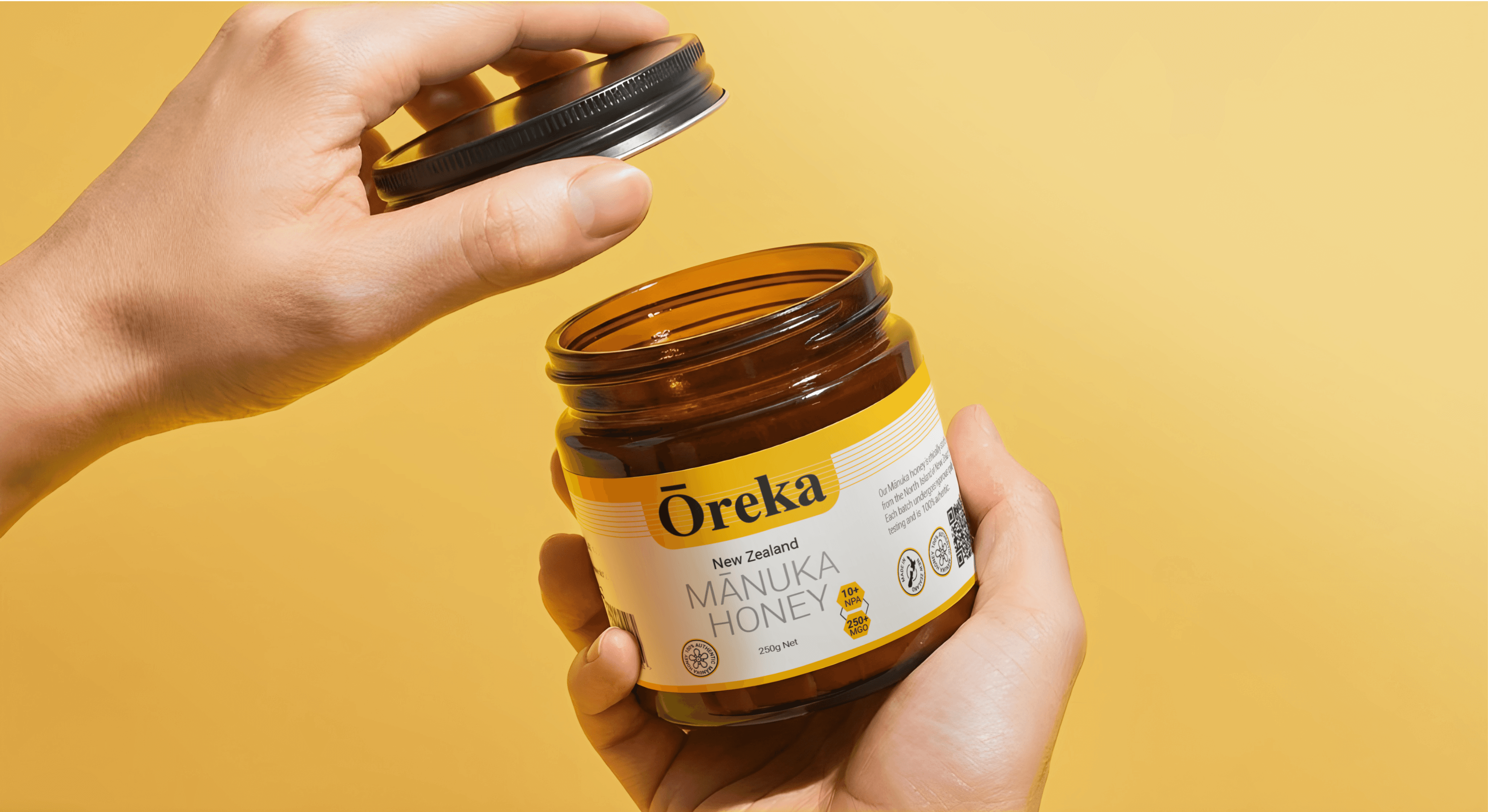
Ōreka is a New Zealand Mānuka honey brand founded by a couple with a clear ambition: to develop a premium export product designed for Asian markets. From the outset, they wanted the brand to feel clinical and credible; something that could sit comfortably on the shelf of a pharmacy rather than a farmers' market. We carried that thinking through the brand identity, the visual language, and ultimately, into the packaging itself.
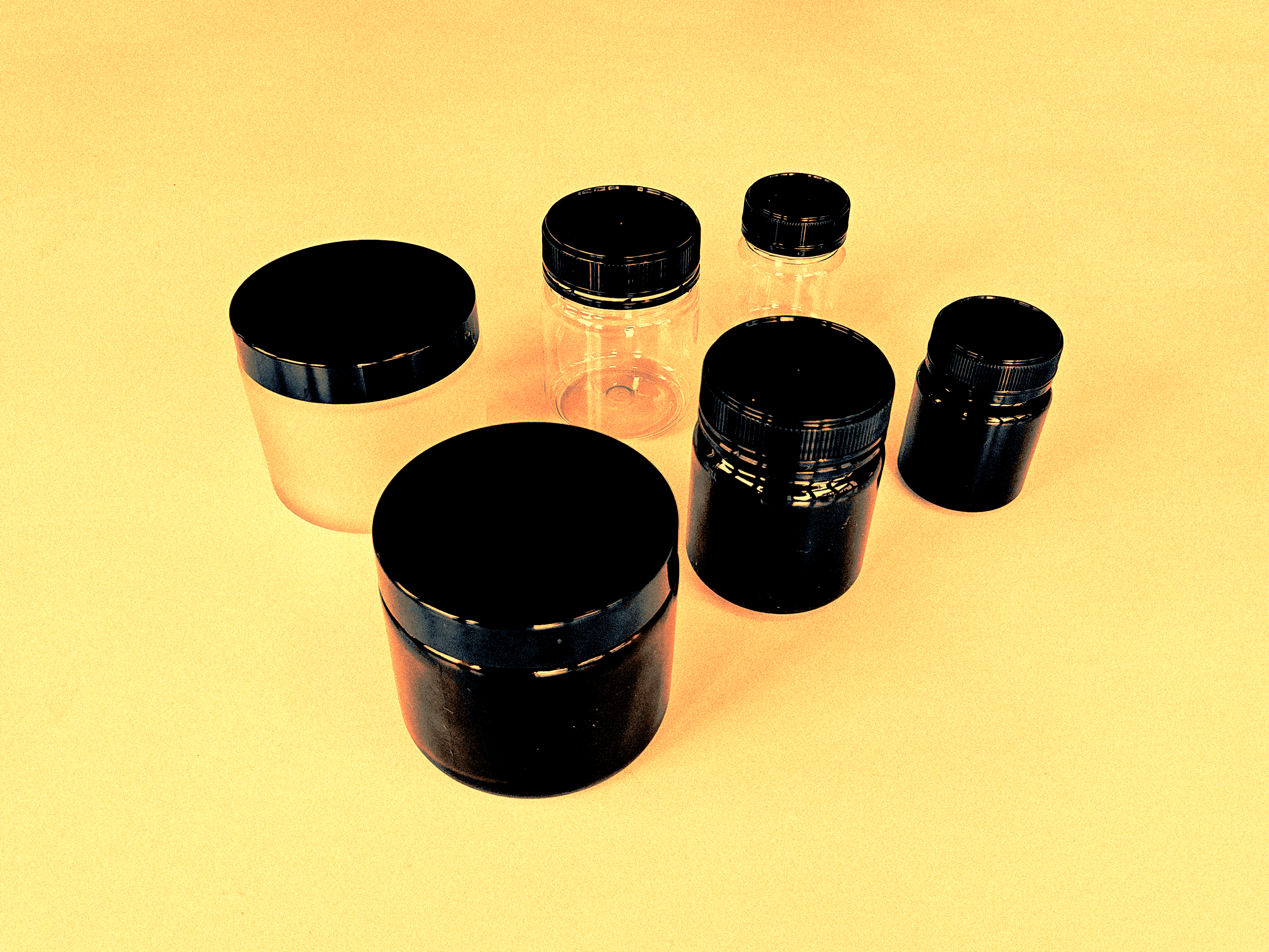
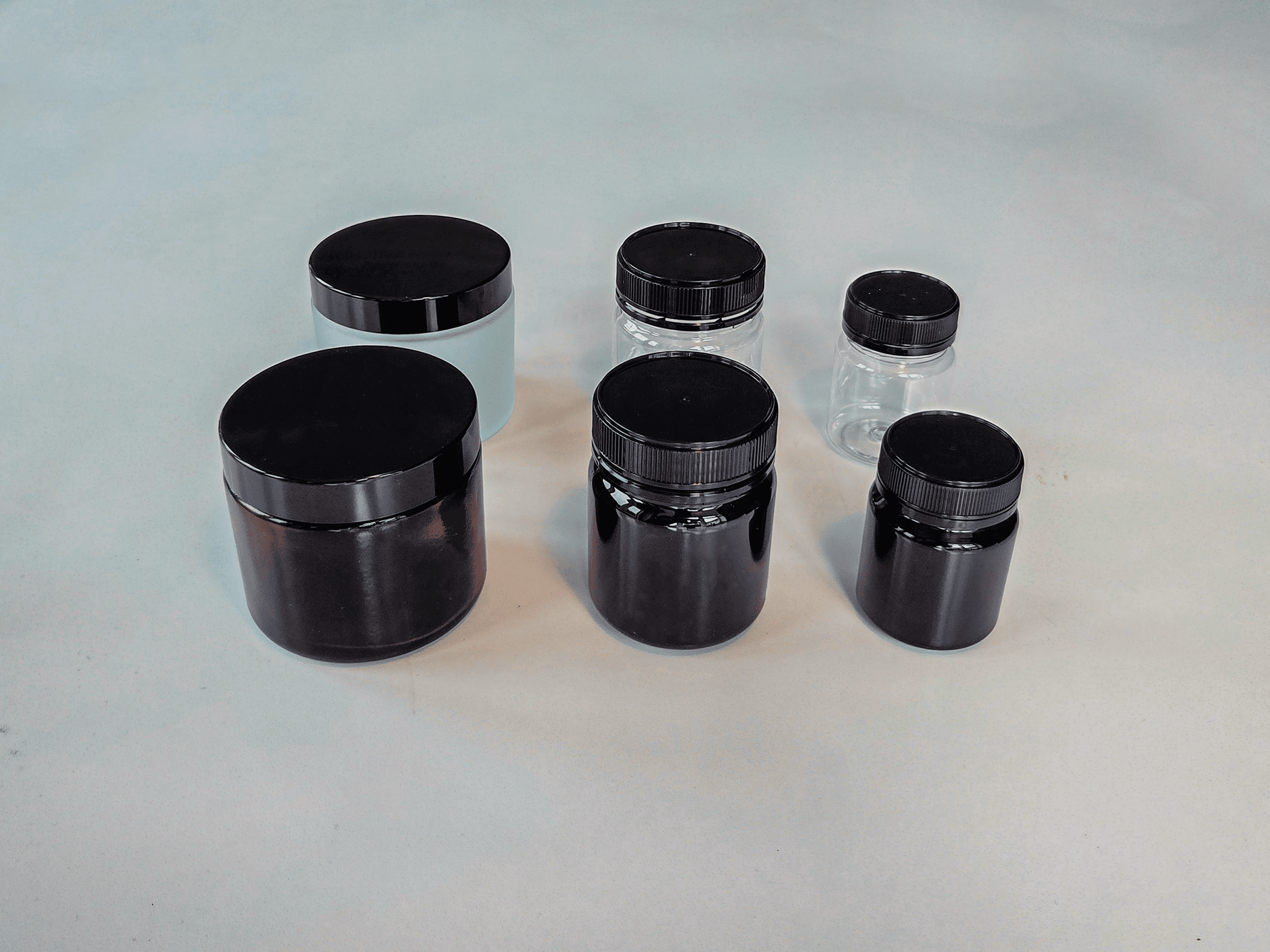
In the retail market, Mānuka honey packaging is typically either glass or polyethylene terephthalate (you know it as PET). Both materials have compelling advantages. Here is why we opted for recycled amber glass, where we think the case is strong, and where we think fair criticisms remain.
Honey and its jar problem
What you package honey in is, surprisingly, a contentious topic. The conversation tends to get reductive fast. Glass good, plastic bad. Or: plastic is lighter, so it ships cleaner. The reality sits somewhere more nuanced.
We break the question into three stages, and weigh each against two separate sets of concerns: the sustainability case and the brand-alignment case. Both matter, but they are different arguments, and we will try to be clear about which one we are making at any given point.
Start of life. Where does the material come from? How much energy does it take to produce? What are the carbon emissions and environmental impacts?
Usage. What happens while the product is in transit, on the shelf, and in someone's home? How does the material interact with the product inside it? What are the implications for shipping weight?
End of life. What happens when the jar is empty? Is the material practically recyclable in the target markets? Is it downcycled into something lesser, or does it retain its value through repeated loops?
A framework alone does not make the decision. You also have to account for functional performance and cost. Sustainability is the most important factor - we genuinely believe that - but a product that fails commercially will never realise its sustainability impact at any meaningful scale.
So, for Ōreka, we ran the comparison: recycled glass against recycled PET (rPET).
Start of life
In raw energy terms, rPET generally requires less energy to produce. That much is true, and it would be dishonest to pretend otherwise. All things equal, plastic is lighter to manufacture and less energy-intensive in its creation.
But energy consumption is only one part of the picture. PET is a fossil fuel-based material. While 100% rPET containers do exist and are becoming more common, particularly in the beverage industry, virgin plastic is still frequently blended back in to maintain structural integrity. The glass we selected was sourced entirely from recycled origin, and its base ingredients carry no petroleum dependency. That said, glass furnaces are energy-intensive and overwhelmingly powered by natural gas, so claiming glass is free from fossil fuel involvement would be misleading.
If you are keeping score at the start-of-life stage alone, the case for rPET is reasonable.
Usage
Ōreka is an export product. It ships from New Zealand into Asian markets, which means long-haul transit across wide temperature ranges. Mānuka honey is slightly acidic, with a pH typically between 3.2 and 4.5. When you combine temperature fluctuation - container interiors can reach extremes approaching 60 to 70 degrees C in severe cases - with an acidic product inside a plastic vessel, you introduce the risk of chemical leaching and microplastic contamination. A 2025 study recently found that higher temperatures significantly increased antimony and phthalate contaminant migration from PET into acidic solutions [1]. Research continues to evolve in this space, but the direction of the evidence is consistent enough that we could not in good conscience ignore it.
Glass is inert. It introduces no toxins, no chemicals, and no microplastics into the product regardless of temperature or acidity. That is a straightforward material advantage.
There is also the UV question. Amber glass filters ultraviolet light, providing natural protection against degradation of Mānuka honey's bioactive compounds, particularly methylglyoxal (MGO), the compound primarily responsible for its antibacterial properties [2].
For a brand built on pharmaceutical credibility, even the perception of contamination is a problem. The product has to be perfectly clean. The inertness of glass aligns directly with that brand promise.
However, there are definitely trade-offs here. Glass jars are heavier than PET jars, roughly two to three times heavier for equivalent volumes. For a product shipping from Auckland to markets across Asia, that weight penalty translates to higher freight costs and higher per-unit transit emissions.
There is also the question of breakage. Glass breaks and PET does not. For long-haul export, this is a real concern that requires careful secondary packaging design and adds cost. We mitigate this through our box design, but we would be misrepresenting the picture if we did not acknowledge that breakage risk exists and that it is a genuine disadvantage of the material.
We concluded that when the material itself can compromise the product's integrity, the weight and breakage penalties become acceptable costs. But we want to be honest: these are costs, not trivialities.
End of life
Glass is infinitely recyclable. It does not degrade in quality through recycling the way mechanically recycled plastic does. A glass jar recycled today can become another glass jar tomorrow, at the same quality, indefinitely.
rPET, by comparison, is downcycled more often than it is truly recycled through conventional mechanical processes. Each loop degrades the polymer chains, and eventually the material exits the recycling stream entirely. It is worth noting that emerging chemical recycling technologies can restore PET to virgin quality, and if these scale successfully, they could meaningfully change the end-of-life calculus for plastic packaging in the future. As of writing, however, these processes are not yet widely available at commercial scale.
The systems to recycle PET exist, but participation rates and actual recovery rates tell a less optimistic story than the "recyclable" label on packaging suggests.
Rather than making a general claim about glass recycling being available "in most markets," we should be specific. Ōreka's primary target markets include Japan, South Korea, and Singapore. Japan and South Korea have well-established glass recycling infrastructure, with Japan achieving a container glass recycling rate above 70% [3]. Singapore's glass recycling rate is significantly lower, and we are honest about the fact that our end-of-life argument is weaker in that market. We are watching infrastructure developments there closely.
There is a softer factor here, one that is harder to quantify but easy to observe: people are more likely to reuse a glass jar. It is perceived as a higher-value object. A glass vessel earns a second life on a kitchen shelf or a bathroom counter in a way that a plastic container almost never does. That extended use phase, while difficult to measure in a lifecycle analysis, meaningfully delays the product's entry into the waste stream.
The whole picture
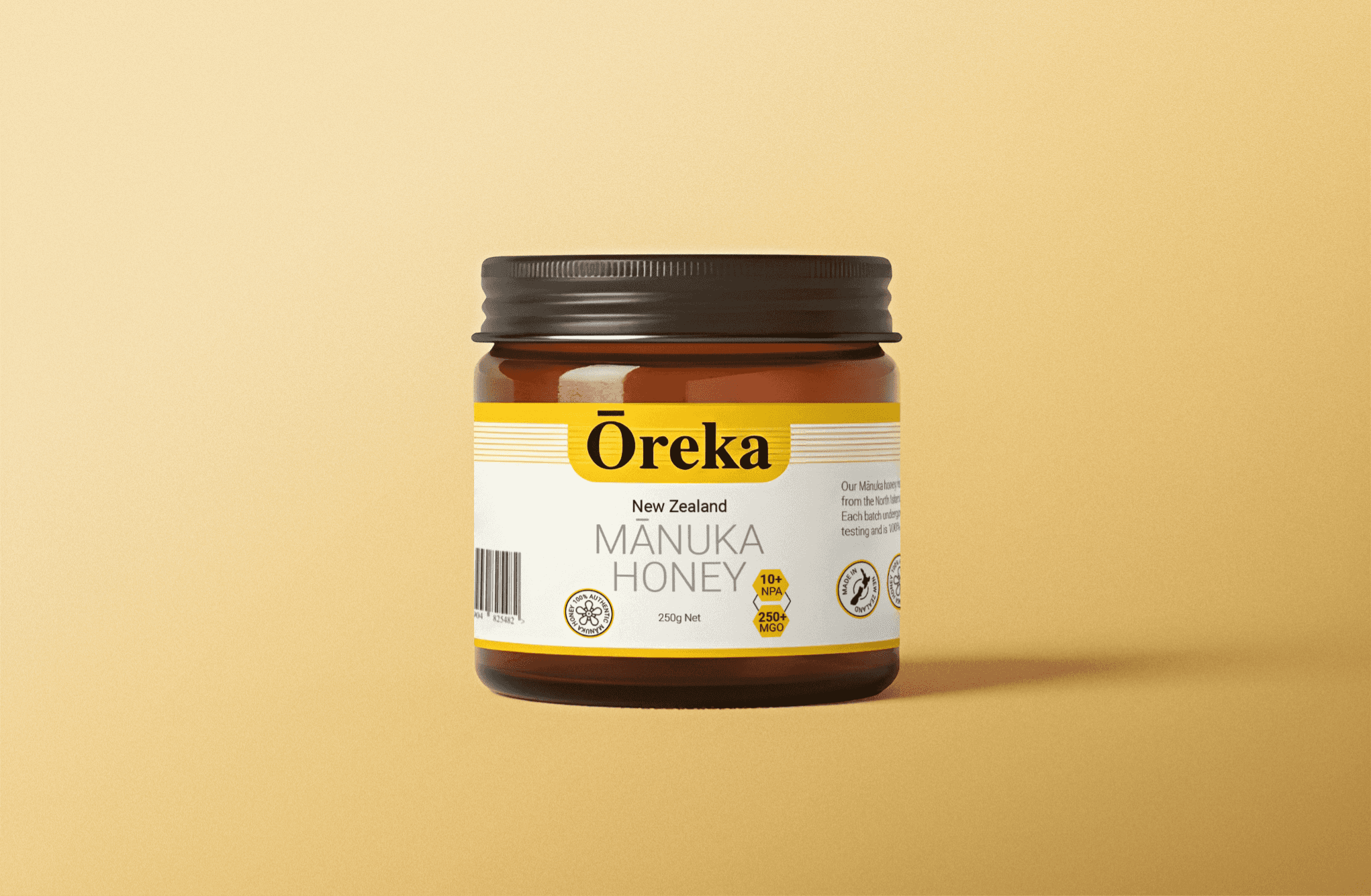
We chose recycled amber glass for Ōreka for a combination of reasons that span both sustainability and brand concerns:
End of life: Glass offers genuinely circular recyclability in most of our target markets.
Product integrity: Glass is inert and protects Mānuka honey's bioactive compounds from chemical interaction and UV degradation during long-haul transit.
Brand alignment: Glass aligns with the pharmaceutical positioning in a way that plastic cannot replicate.
Could we have made a defensible case for rPET? Probably, on certain metrics; particularly start-of-life energy and shipping weight. Sustainability decisions are rarely clean victories across every dimension simultaneously. But when we layered the sustainability framework over the brand's identity, its export logistics, and the functional requirements of housing an acidic, bioactive product across variable conditions, glass emerged as the clear choice.
We do not think glass is a perfect material. We think it was the right material for this product, this brand, and these markets.
Material selection is one of those decisions that quietly defines everything downstream. It shapes how a product is perceived, how it performs, and what happens to it long after the last spoonful of honey. We think it deserves more deliberation than it usually gets, and we hope this look behind the curtain is useful for anyone navigating the same questions.
What is your take? Do you think the sustainability case for glass holds up? We would genuinely like to hear how others are thinking about this. Contact us with your thoughts via email - hello@forrestblake.com.
Thanks for reading.
[1] A. S. D. Badarou, C. Lagnika, H. M. Hounhouigan, A. T. Gantongbe, A. M. Amoussa, G. Song, and L. Lagnika, "Migration of antimony and phthalate esters from plastic food packaging: A systematic review of reported levels, food matrix effects and influencing factors," Nutr. Food Sci., vol. 13, no. 3, 2025.
[2] G. Yalcin, "Effects of thermal treatment, ultrasonication, and sunlight exposure on antioxidant properties of honey," Turk. J. Pharm. Sci., vol. 18, no. 6, pp. 776--780, Dec. 2021, doi: 10.4274/tjps.galenos.2021.53810.
[3] Japan Fair Trade Commission, "Market study report on the recycling of used plastic bottles," 2023. [Online]. Available: https://www.jftc.go.jp/file/240507EN1.pdf
We have a habit of turning the decisions most people gloss over into the ones we spend the most time on. Packaging material selection is one of those decisions. It sounds mundane, but when you sit with it long enough, it becomes one of the most consequential choices in the entire brand-building process.
Ōreka is a New Zealand Mānuka honey brand founded by a couple with a clear ambition: to develop a premium export product designed for Asian markets. From the outset, they wanted the brand to feel clinical and credible; something that could sit comfortably on the shelf of a pharmacy rather than a farmers' market. We carried that thinking through the brand identity, the visual language, and ultimately, into the packaging itself.
In the retail market, Mānuka honey packaging is typically either glass or polyethylene terephthalate (you know it as PET). Both materials have compelling advantages. Here is why we opted for recycled amber glass, where we think the case is strong, and where we think fair criticisms remain.
Honey and its jar problem
What you package honey in is, surprisingly, a contentious topic. The conversation tends to get reductive fast. Glass good, plastic bad. Or: plastic is lighter, so it ships cleaner. The reality sits somewhere more nuanced.
We break the question into three stages, and weigh each against two separate sets of concerns: the sustainability case and the brand-alignment case. Both matter, but they are different arguments, and we will try to be clear about which one we are making at any given point.
Start of life. Where does the material come from? How much energy does it take to produce? What are the carbon emissions and environmental impacts?
Usage. What happens while the product is in transit, on the shelf, and in someone's home? How does the material interact with the product inside it? What are the implications for shipping weight?
End of life. What happens when the jar is empty? Is the material practically recyclable in the target markets? Is it downcycled into something lesser, or does it retain its value through repeated loops?
A framework alone does not make the decision. You also have to account for functional performance and cost. Sustainability is the most important factor - we genuinely believe that - but a product that fails commercially will never realise its sustainability impact at any meaningful scale.
So, for Ōreka, we ran the comparison: recycled glass against recycled PET (rPET).
Start of life
In raw energy terms, rPET generally requires less energy to produce. That much is true, and it would be dishonest to pretend otherwise. All things equal, plastic is lighter to manufacture and less energy-intensive in its creation.
But energy consumption is only one part of the picture. PET is a fossil fuel-based material. While 100% rPET containers do exist and are becoming more common, particularly in the beverage industry, virgin plastic is still frequently blended back in to maintain structural integrity. The glass we selected was sourced entirely from recycled origin, and its base ingredients carry no petroleum dependency. That said, glass furnaces are energy-intensive and overwhelmingly powered by natural gas, so claiming glass is free from fossil fuel involvement would be misleading.
If you are keeping score at the start-of-life stage alone, the case for rPET is reasonable.
Usage
Ōreka is an export product. It ships from New Zealand into Asian markets, which means long-haul transit across wide temperature ranges. Mānuka honey is slightly acidic, with a pH typically between 3.2 and 4.5. When you combine temperature fluctuation - container interiors can reach extremes approaching 60 to 70 degrees C in severe cases - with an acidic product inside a plastic vessel, you introduce the risk of chemical leaching and microplastic contamination. A 2025 study recently found that higher temperatures significantly increased antimony and phthalate contaminant migration from PET into acidic solutions [1]. Research continues to evolve in this space, but the direction of the evidence is consistent enough that we could not in good conscience ignore it.
Glass is inert. It introduces no toxins, no chemicals, and no microplastics into the product regardless of temperature or acidity. That is a straightforward material advantage.
There is also the UV question. Amber glass filters ultraviolet light, providing natural protection against degradation of Mānuka honey's bioactive compounds, particularly methylglyoxal (MGO), the compound primarily responsible for its antibacterial properties [2].
For a brand built on pharmaceutical credibility, even the perception of contamination is a problem. The product has to be perfectly clean. The inertness of glass aligns directly with that brand promise.
However, there are definitely trade-offs here. Glass jars are heavier than PET jars, roughly two to three times heavier for equivalent volumes. For a product shipping from Auckland to markets across Asia, that weight penalty translates to higher freight costs and higher per-unit transit emissions.
There is also the question of breakage. Glass breaks and PET does not. For long-haul export, this is a real concern that requires careful secondary packaging design and adds cost. We mitigate this through our box design, but we would be misrepresenting the picture if we did not acknowledge that breakage risk exists and that it is a genuine disadvantage of the material.
We concluded that when the material itself can compromise the product's integrity, the weight and breakage penalties become acceptable costs. But we want to be honest: these are costs, not trivialities.
End of life
Glass is infinitely recyclable. It does not degrade in quality through recycling the way mechanically recycled plastic does. A glass jar recycled today can become another glass jar tomorrow, at the same quality, indefinitely.
rPET, by comparison, is downcycled more often than it is truly recycled through conventional mechanical processes. Each loop degrades the polymer chains, and eventually the material exits the recycling stream entirely. It is worth noting that emerging chemical recycling technologies can restore PET to virgin quality, and if these scale successfully, they could meaningfully change the end-of-life calculus for plastic packaging in the future. As of writing, however, these processes are not yet widely available at commercial scale.
The systems to recycle PET exist, but participation rates and actual recovery rates tell a less optimistic story than the "recyclable" label on packaging suggests.
Rather than making a general claim about glass recycling being available "in most markets," we should be specific. Ōreka's primary target markets include Japan, South Korea, and Singapore. Japan and South Korea have well-established glass recycling infrastructure, with Japan achieving a container glass recycling rate above 70% [3]. Singapore's glass recycling rate is significantly lower, and we are honest about the fact that our end-of-life argument is weaker in that market. We are watching infrastructure developments there closely.
There is a softer factor here, one that is harder to quantify but easy to observe: people are more likely to reuse a glass jar. It is perceived as a higher-value object. A glass vessel earns a second life on a kitchen shelf or a bathroom counter in a way that a plastic container almost never does. That extended use phase, while difficult to measure in a lifecycle analysis, meaningfully delays the product's entry into the waste stream.
The whole picture
We chose recycled amber glass for Ōreka for a combination of reasons that span both sustainability and brand concerns:
End of life: Glass offers genuinely circular recyclability in most of our target markets.
Product integrity: Glass is inert and protects Mānuka honey's bioactive compounds from chemical interaction and UV degradation during long-haul transit.
Brand alignment: Glass aligns with the pharmaceutical positioning in a way that plastic cannot replicate.
Could we have made a defensible case for rPET? Probably, on certain metrics; particularly start-of-life energy and shipping weight. Sustainability decisions are rarely clean victories across every dimension simultaneously. But when we layered the sustainability framework over the brand's identity, its export logistics, and the functional requirements of housing an acidic, bioactive product across variable conditions, glass emerged as the clear choice.
We do not think glass is a perfect material. We think it was the right material for this product, this brand, and these markets.
Material selection is one of those decisions that quietly defines everything downstream. It shapes how a product is perceived, how it performs, and what happens to it long after the last spoonful of honey. We think it deserves more deliberation than it usually gets, and we hope this look behind the curtain is useful for anyone navigating the same questions.
What is your take? Do you think the sustainability case for glass holds up? We would genuinely like to hear how others are thinking about this. Contact us with your thoughts via email - hello@forrestblake.com.
Thanks for reading.
[1] A. S. D. Badarou, C. Lagnika, H. M. Hounhouigan, A. T. Gantongbe, A. M. Amoussa, G. Song, and L. Lagnika, "Migration of antimony and phthalate esters from plastic food packaging: A systematic review of reported levels, food matrix effects and influencing factors," Nutr. Food Sci., vol. 13, no. 3, 2025.
[2] G. Yalcin, "Effects of thermal treatment, ultrasonication, and sunlight exposure on antioxidant properties of honey," Turk. J. Pharm. Sci., vol. 18, no. 6, pp. 776--780, Dec. 2021, doi: 10.4274/tjps.galenos.2021.53810.
[3] Japan Fair Trade Commission, "Market study report on the recycling of used plastic bottles," 2023. [Online]. Available: https://www.jftc.go.jp/file/240507EN1.pdf