

Eco-Friendly, Natural, Green: What These Words Actually Mean (and Don't)
Walk down any store aisle and you will see the same vocabulary repeating across wildly different products. A bottle of detergent is "eco-friendly." A t-shirt is "natural." A takeaway container is "plant-based." A shampoo bottle is "recyclable." The words feel reassuring, which is precisely the point. They allow a product to sound sustainable with little to back it up.
The core issue is that most of these terms have no generally accepted definition. A manufacturer can print "green" on a package with roughly the same regulatory oversight as printing "delicious." The European Commission's 2020 screening of environmental claims across the EU found that over 50% were vague, misleading or unfounded, and 42% were entirely unsubstantiated [1]. Australia's ACCC internet sweep in 2023 found that 57% of businesses reviewed were making concerning environmental claims [2]. No longer a fringe issue, these claims are ubiquitous in the current marketplace.
Below is a working glossary of the terms we encounter most often, and what they actually mean.
Eco-friendly
The most common, and the most empty. No jurisdiction we are aware of defines "eco-friendly" in enforceable terms. The US Federal Trade Commission's Green Guides explicitly caution against unqualified general claims like "eco-friendly" because they convey a broad range of benefits that few products can substantiate [3]. The term implies a net environmental positive across a product's life cycle, which requires verified life cycle assessment data that is almost never provided alongside the claim. When "eco-friendly" appears without a specific, measurable qualifier next to it (such as "made with 80% post-consumer recycled content"), treat it as marketing copy rather than environmental information.
Natural
"Natural" describes origin, not impact. Crude oil is natural. Arsenic is natural. Palm oil grown on cleared peatland is natural. The term tells you nothing about how the material was extracted, processed, transported or disposed of. Cotton is a useful case study: it is as natural as a fibre gets, and yet to cultivate the cotton required for a single t-shirt, the amount of water needed is over 2700 litres [4]. Being natural does not mean sustainable.
Green
"Green" functions as a mood rather than a claim. It is frequently paired with colour, leaf iconography and earth tones to create a halo effect around a product where the aesthetics cause consumers to infer environmental benefits that were never stated. A 2020 study in the Journal of Business Ethics found that nature-evoking visual cues alone significantly increased consumer perception of sustainability, even when product attributes were held constant [5].
Plant-based, paper-based, bio-based
The "-based" suffix is where things get genuinely slippery. A material that is "plant-based" may contain as little as 20% plant-derived content, with the remainder being conventional petrochemical plastic. “Bio-based” plastics such as bio-PET are chemically identical to their fossil-derived counterparts and behave the same way in the environment, with the same persistence and microplastic shedding [6]. "Paper-based" packaging often contains plastic liners, aluminium layers or bioplastic coatings that prevent it from being recycled through paper streams, and degrading in home compost conditions. The prefix grabs consumers' attention with an appealing word, but the material's real world sustainability often falls short.
European standard EN 16785-1 defines bio-based content measurement, but using the term commercially does not require certification to that standard in most markets [7]. A product can be labelled "plant-based" with no verified plant content percentage at all.
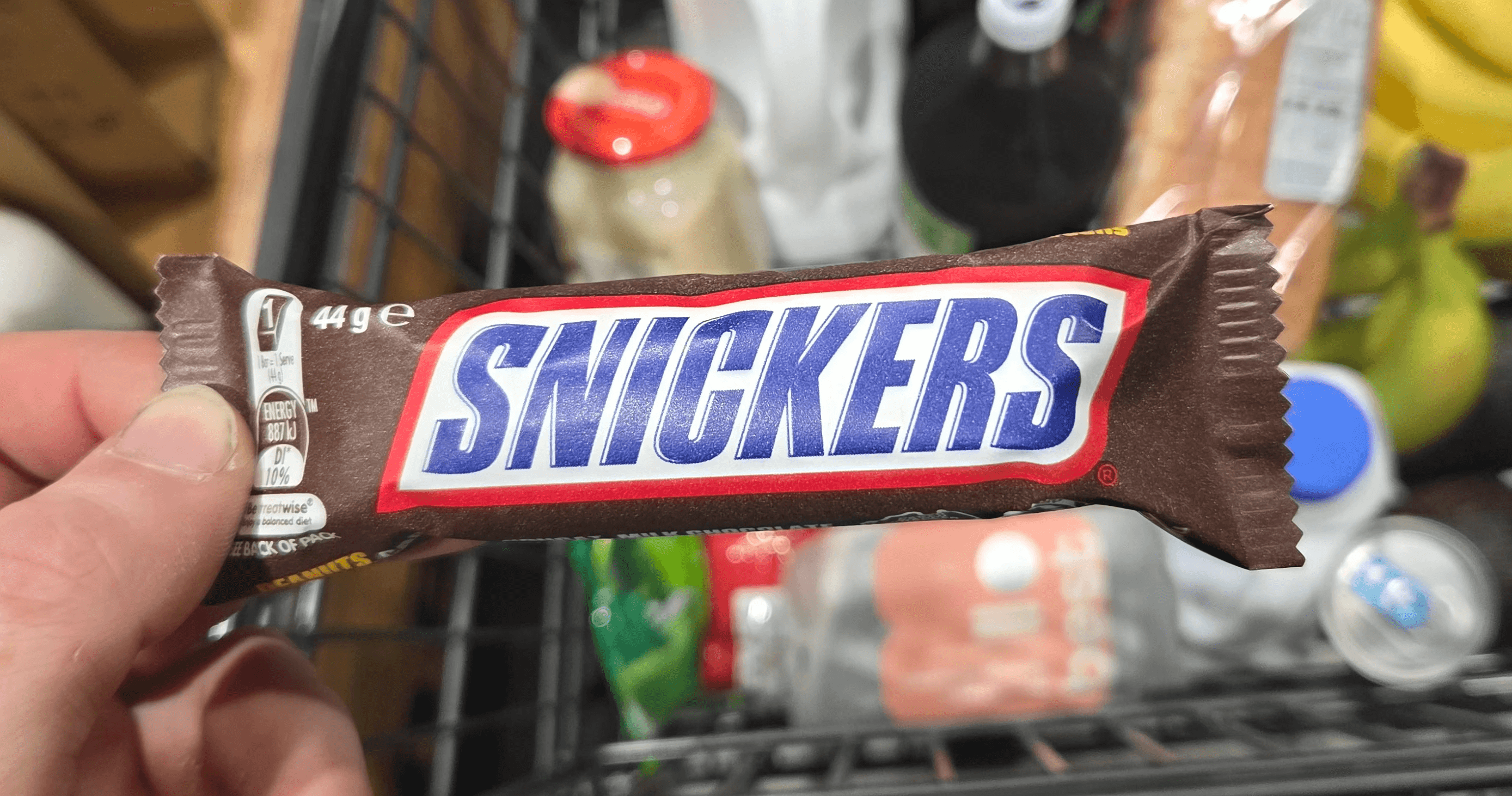
Mars New Zealand recently swapped their Mars, Milky Way and Snickers chocolate bar wrappers with a new paper based solution. These wrappers have a paper exterior lined with plastic film to provide a moisture barrier. Unfortunately in New Zealand these wrappers aren't recyclable nor compostable, which sours the otherwise delicious product.
Recyclable
The term "recyclable" tends to be used theoretically instead of reflecting real world practice. A material is technically recyclable if a process exists somewhere that can reprocess it. Whether that process is available to the consumer buying the product is a separate question. Soft plastics are technically recyclable. In New Zealand, the Soft Plastics Recycling Scheme covers a limited number of drop-off points and has faced repeated capacity issues [8]. In Australia, the collapse of REDcycle in 2022 left an estimated 11,000 tonnes of soft plastic stockpiled with no processing pathway [9].
The FTC Green Guides state that unqualified recyclable claims should only be made if recycling facilities are available to a "substantial majority" of consumers where the product is sold, defined as at least 60% [3]. Enforcement is another matter. A product carrying a recyclable symbol in a region where 5% of councils accept that material is making a claim that is practically meaningless.
The deeper issue is that recyclability as a concept has been doing heavy lifting for decades to justify continued production of single-use materials. Internal industry documents from the 1970s onward show that major plastic producers promoted recycling as a public-facing solution while privately acknowledging that most plastic recycling was not economically viable at scale [10].
Sustainable, clean, conscious, responsible
These terms share a common structure: they describe emotive values rather than a tangible property. "Sustainable" has a meaning first defined in Our Common Future - a 1987 report by the United Nations - but in commercial use it has drifted to mean, broadly, "better than the alternative in some unspecified way." "Clean" borrows credibility from food and cosmetics contexts where it has equally loose definitions. "Conscious" and "responsible" place moral weight on the purchase without specifying any property of the product itself.
The tides are turning
The regulatory environment is shifting. The EU's Green Claims Directive, in development since 2023, proposes to require substantiation and third-party verification for environmental claims before they can be used commercially [11]. The UK Competition and Markets Authority published its Green Claims Code in 2021 [12]. Australia's ACCC has issued draft guidance and taken enforcement action against specific companies [13]. New Zealand's Commerce Commission has flagged greenwashing as a focus area [14].
Enforcement remains slow relative to the volume of claims being made. A brand that adopts vague language faces low legal risk and high marketing upside. However, we forecast this to change drastically over the next 5-10 years.
Our take
When we review materials and claims on client projects, we treat unqualified buzzwords as an absence of information. If we cannot quantify the percentage of recycled content, the specific certification held, the end-of-life pathway available in the target market, or the life cycle impact, the claim is not doing useful work. It is purely decorative.
We like to ask questions here at Forrest Blake, and our modus operandi is to assume the modern day informed consumer will do the same. "Eco-friendly" does not survive the interrogation of "in what respect, measured how, verified by whom." "40% post-consumer recycled PET, certified to GRS, kerbside recyclable in 92% of target-market councils" does. Specificity is key.
There also exists a great irony, to write this post railing on environmental buzzwords when we as a studio use the word sustainable to describe the work we do. We justify it by remaining true to the original definition: we aim to provide design solutions that address the commercial needs of today, without sacrificing environmental needs of the future. We believe we can meet these needs without greenwashing, by meeting the consumer of today with the radical transparency they’re demanding.
We would like to hear how others are evaluating material claims from suppliers. If you are sorting through a stack of spec sheets and trying to separate substance from decoration, reach out to us at hello@forrestblake.com.
Thanks for reading.
[1] European Commission, "Screening of websites for 'greenwashing': half of green claims lack evidence," Jan. 2021. [Online]. Available: https://ec.europa.eu/commission/presscorner/detail/en/ip_21_269
[2] Australian Competition and Consumer Commission, "ACCC 'greenwashing' internet sweep unearths widespread concerning claims," Mar. 2023. [Online]. Available: https://www.accc.gov.au/media-release/accc-greenwashing-internet-sweep-unearths-widespread-concerning-claims
[3] U.S. Federal Trade Commission, "Guides for the Use of Environmental Marketing Claims," Title 16 Chapter I Subchapter B Part 260, 2012.
[4] World Wildlife Fund, "The impact of a cotton t-shirt," World Wildlife Fund, 2013. [Online]. Available: https://www.worldwildlife.org/
[5] D. Schmuck, J. Matthes, and B. Naderer, "Misleading consumers with green advertising? An affect–reason–involvement account of greenwashing effects in environmental advertising," *Journal of Advertising*, vol. 47, no. 2, pp. 127–145, 2018, doi: 10.1080/00913367.2018.1452652.
[6] European Environment Agency, "Biodegradable and compostable plastics — challenges and opportunities," EEA Briefing, 2020.
[7] European Committee for Standardization, "EN 16785-1:2015 Bio-based products — Bio-based content — Part 1: Determination of the bio-based content using the radiocarbon analysis and elemental analysis," 2015.
[8] Ministry for the Environment (NZ), "Soft Plastic Recycling Scheme" 2020. [Online]. Available: https://environment.govt.nz/what-you-can-do/stories/soft-plastic-recycling-scheme/
[9] D. Dumas, "REDcycle's collapse and the hard truths on recycling soft plastics in Australia," The Guardian, Jan. 29, 2024. [Online]. Available: https://www.theguardian.com/australia-news/2024/jan/30/redcycles-collapse-and-the-hard-truths-on-recycling-soft-plastics-in-australia
[10] L. Sullivan, "How Big Oil Misled The Public Into Believing Plastic Would Be Recycled," NPR, Sep. 2020. [Online]. Available: https://www.npr.org/2020/09/11/897692090
[11] European Commission, "Proposal for a Directive on substantiation and communication of explicit environmental claims (Green Claims Directive)," COM(2023) 166 final, Mar. 2023.
[12] UK Competition and Markets Authority, "Green Claims Code: Making environmental claims," Sep. 2021.
[13] Australian Competition and Consumer Commission, "A guide to making environmental claims for business," ACCC, Canberra, ACT, Australia, Dec. 12, 2023. [Online]. Available: https://www.accc.gov.au/about-us/publications/a-guide-to-making-environmental-claims-for-business
[14] Commerce Commission New Zealand, "Environmental claims," Commerce Commission, Wellington, New Zealand. [Online]. Available: https://www.comcom.govt.nz/business/dealing-with-typical-situations/environmental-claims/
Walk down any store aisle and you will see the same vocabulary repeating across wildly different products. A bottle of detergent is "eco-friendly." A t-shirt is "natural." A takeaway container is "plant-based." A shampoo bottle is "recyclable." The words feel reassuring, which is precisely the point. They allow a product to sound sustainable with little to back it up.
The core issue is that most of these terms have no generally accepted definition. A manufacturer can print "green" on a package with roughly the same regulatory oversight as printing "delicious." The European Commission's 2020 screening of environmental claims across the EU found that over 50% were vague, misleading or unfounded, and 42% were entirely unsubstantiated [1]. Australia's ACCC internet sweep in 2023 found that 57% of businesses reviewed were making concerning environmental claims [2]. No longer a fringe issue, these claims are ubiquitous in the current marketplace.
Below is a working glossary of the terms we encounter most often, and what they actually mean.
Eco-friendly
The most common, and the most empty. No jurisdiction we are aware of defines "eco-friendly" in enforceable terms. The US Federal Trade Commission's Green Guides explicitly caution against unqualified general claims like "eco-friendly" because they convey a broad range of benefits that few products can substantiate [3]. The term implies a net environmental positive across a product's life cycle, which requires verified life cycle assessment data that is almost never provided alongside the claim. When "eco-friendly" appears without a specific, measurable qualifier next to it (such as "made with 80% post-consumer recycled content"), treat it as marketing copy rather than environmental information.
Natural
"Natural" describes origin, not impact. Crude oil is natural. Arsenic is natural. Palm oil grown on cleared peatland is natural. The term tells you nothing about how the material was extracted, processed, transported or disposed of. Cotton is a useful case study: it is as natural as a fibre gets, and yet to cultivate the cotton required for a single t-shirt, the amount of water needed is over 2700 litres [4]. Being natural does not mean sustainable.
Green
"Green" functions as a mood rather than a claim. It is frequently paired with colour, leaf iconography and earth tones to create a halo effect around a product where the aesthetics cause consumers to infer environmental benefits that were never stated. A 2020 study in the Journal of Business Ethics found that nature-evoking visual cues alone significantly increased consumer perception of sustainability, even when product attributes were held constant [5].
Plant-based, paper-based, bio-based
The "-based" suffix is where things get genuinely slippery. A material that is "plant-based" may contain as little as 20% plant-derived content, with the remainder being conventional petrochemical plastic. “Bio-based” plastics such as bio-PET are chemically identical to their fossil-derived counterparts and behave the same way in the environment, with the same persistence and microplastic shedding [6]. "Paper-based" packaging often contains plastic liners, aluminium layers or bioplastic coatings that prevent it from being recycled through paper streams, and degrading in home compost conditions. The prefix grabs consumers' attention with an appealing word, but the material's real world sustainability often falls short.
European standard EN 16785-1 defines bio-based content measurement, but using the term commercially does not require certification to that standard in most markets [7]. A product can be labelled "plant-based" with no verified plant content percentage at all.
Mars New Zealand recently swapped their Mars, Milky Way and Snickers chocolate bar wrappers with a new paper based solution. These wrappers have a paper exterior lined with plastic film to provide a moisture barrier. Unfortunately in New Zealand these wrappers aren't recyclable nor compostable, which sours the otherwise delicious product.
Recyclable
The term "recyclable" tends to be used theoretically instead of reflecting real world practice. A material is technically recyclable if a process exists somewhere that can reprocess it. Whether that process is available to the consumer buying the product is a separate question. Soft plastics are technically recyclable. In New Zealand, the Soft Plastics Recycling Scheme covers a limited number of drop-off points and has faced repeated capacity issues [8]. In Australia, the collapse of REDcycle in 2022 left an estimated 11,000 tonnes of soft plastic stockpiled with no processing pathway [9].
The FTC Green Guides state that unqualified recyclable claims should only be made if recycling facilities are available to a "substantial majority" of consumers where the product is sold, defined as at least 60% [3]. Enforcement is another matter. A product carrying a recyclable symbol in a region where 5% of councils accept that material is making a claim that is practically meaningless.
The deeper issue is that recyclability as a concept has been doing heavy lifting for decades to justify continued production of single-use materials. Internal industry documents from the 1970s onward show that major plastic producers promoted recycling as a public-facing solution while privately acknowledging that most plastic recycling was not economically viable at scale [10].
Sustainable, clean, conscious, responsible
These terms share a common structure: they describe emotive values rather than a tangible property. "Sustainable" has a meaning first defined in Our Common Future - a 1987 report by the United Nations - but in commercial use it has drifted to mean, broadly, "better than the alternative in some unspecified way." "Clean" borrows credibility from food and cosmetics contexts where it has equally loose definitions. "Conscious" and "responsible" place moral weight on the purchase without specifying any property of the product itself.
The tides are turning
The regulatory environment is shifting. The EU's Green Claims Directive, in development since 2023, proposes to require substantiation and third-party verification for environmental claims before they can be used commercially [11]. The UK Competition and Markets Authority published its Green Claims Code in 2021 [12]. Australia's ACCC has issued draft guidance and taken enforcement action against specific companies [13]. New Zealand's Commerce Commission has flagged greenwashing as a focus area [14].
Enforcement remains slow relative to the volume of claims being made. A brand that adopts vague language faces low legal risk and high marketing upside. However, we forecast this to change drastically over the next 5-10 years.
Our take
When we review materials and claims on client projects, we treat unqualified buzzwords as an absence of information. If we cannot quantify the percentage of recycled content, the specific certification held, the end-of-life pathway available in the target market, or the life cycle impact, the claim is not doing useful work. It is purely decorative.
We like to ask questions here at Forrest Blake, and our modus operandi is to assume the modern day informed consumer will do the same. "Eco-friendly" does not survive the interrogation of "in what respect, measured how, verified by whom." "40% post-consumer recycled PET, certified to GRS, kerbside recyclable in 92% of target-market councils" does. Specificity is key.
There also exists a great irony, to write this post railing on environmental buzzwords when we as a studio use the word sustainable to describe the work we do. We justify it by remaining true to the original definition: we aim to provide design solutions that address the commercial needs of today, without sacrificing environmental needs of the future. We believe we can meet these needs without greenwashing, by meeting the consumer of today with the radical transparency they’re demanding.
We would like to hear how others are evaluating material claims from suppliers. If you are sorting through a stack of spec sheets and trying to separate substance from decoration, reach out to us at hello@forrestblake.com.
Thanks for reading.
[1] European Commission, "Screening of websites for 'greenwashing': half of green claims lack evidence," Jan. 2021. [Online]. Available: https://ec.europa.eu/commission/presscorner/detail/en/ip_21_269
[2] Australian Competition and Consumer Commission, "ACCC 'greenwashing' internet sweep unearths widespread concerning claims," Mar. 2023. [Online]. Available: https://www.accc.gov.au/media-release/accc-greenwashing-internet-sweep-unearths-widespread-concerning-claims
[3] U.S. Federal Trade Commission, "Guides for the Use of Environmental Marketing Claims," Title 16 Chapter I Subchapter B Part 260, 2012.
[4] World Wildlife Fund, "The impact of a cotton t-shirt," World Wildlife Fund, 2013. [Online]. Available: https://www.worldwildlife.org/
[5] D. Schmuck, J. Matthes, and B. Naderer, "Misleading consumers with green advertising? An affect–reason–involvement account of greenwashing effects in environmental advertising," *Journal of Advertising*, vol. 47, no. 2, pp. 127–145, 2018, doi: 10.1080/00913367.2018.1452652.
[6] European Environment Agency, "Biodegradable and compostable plastics — challenges and opportunities," EEA Briefing, 2020.
[7] European Committee for Standardization, "EN 16785-1:2015 Bio-based products — Bio-based content — Part 1: Determination of the bio-based content using the radiocarbon analysis and elemental analysis," 2015.
[8] Ministry for the Environment (NZ), "Soft Plastic Recycling Scheme" 2020. [Online]. Available: https://environment.govt.nz/what-you-can-do/stories/soft-plastic-recycling-scheme/
[9] D. Dumas, "REDcycle's collapse and the hard truths on recycling soft plastics in Australia," The Guardian, Jan. 29, 2024. [Online]. Available: https://www.theguardian.com/australia-news/2024/jan/30/redcycles-collapse-and-the-hard-truths-on-recycling-soft-plastics-in-australia
[10] L. Sullivan, "How Big Oil Misled The Public Into Believing Plastic Would Be Recycled," NPR, Sep. 2020. [Online]. Available: https://www.npr.org/2020/09/11/897692090
[11] European Commission, "Proposal for a Directive on substantiation and communication of explicit environmental claims (Green Claims Directive)," COM(2023) 166 final, Mar. 2023.
[12] UK Competition and Markets Authority, "Green Claims Code: Making environmental claims," Sep. 2021.
[13] Australian Competition and Consumer Commission, "A guide to making environmental claims for business," ACCC, Canberra, ACT, Australia, Dec. 12, 2023. [Online]. Available: https://www.accc.gov.au/about-us/publications/a-guide-to-making-environmental-claims-for-business
[14] Commerce Commission New Zealand, "Environmental claims," Commerce Commission, Wellington, New Zealand. [Online]. Available: https://www.comcom.govt.nz/business/dealing-with-typical-situations/environmental-claims/